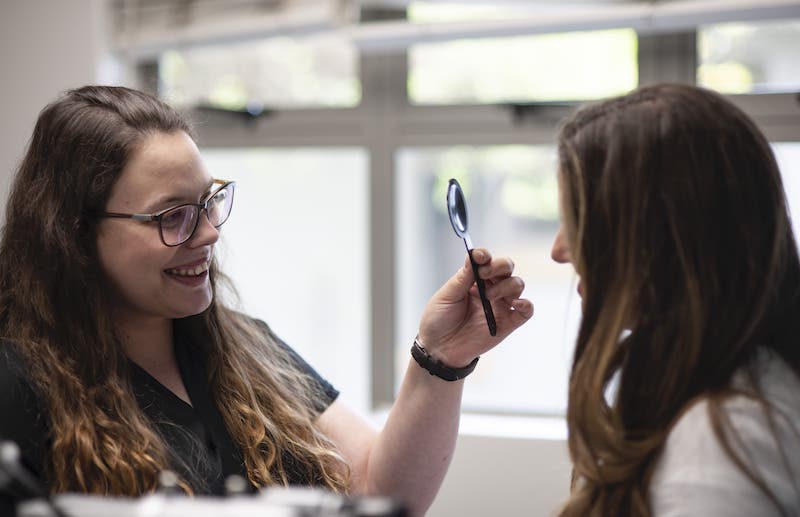
Patient Information

Eye Surgeon, Sandton

Many people aren’t sure how often they should have their eyes checked. As a general guideline, most healthy adults benefit from a comprehensive eye examination every two years, with annual visits recommended from around age 60, or at any age if you have risk factors such as diabetes, a family history of eye disease, or a strong glasses prescription. If you notice any new or worsening eye symptoms — such as sudden changes in vision, eye pain, redness, or new flashes or floaters — please contact us as soon as possible rather than waiting for your next scheduled visit.

Many eye diseases and vision-related problems have minimal symptoms. Over time, your vision can change and eye diseases can escalate. High risk patients like the elderly or those who suffer from health conditions such diabetes may need to see Dr. Neu-Ner regularly.

Our patient info page contains comprehensive and valuable information on what to expect when you visit Dr. Neu-Ner. To save time capturing data on the day of your visit, we encourage all first-time patients to click on the link below to download the patient information form prior to your visit.

Email your completed form to hello@eyecontact.co.za. If you have any questions prior to your first appointment, please do not hesitate to give us a call on 011 875 1866. We will endeavour to answer your questions as best we can.
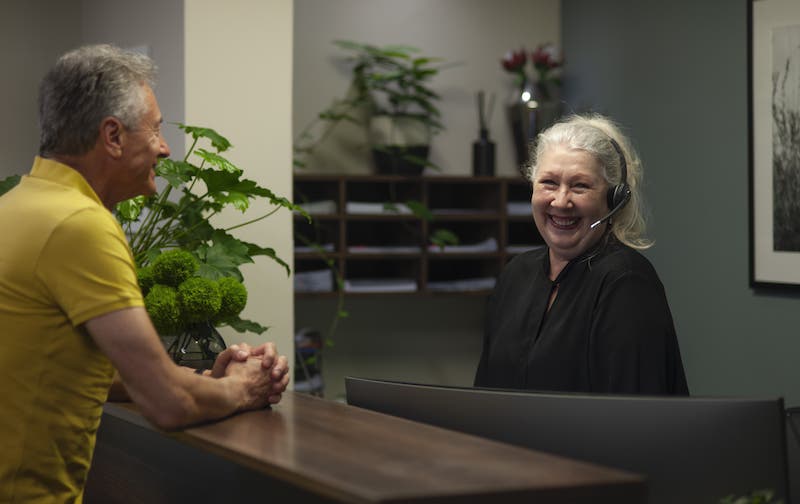
Connect with Dr. Neu-Ner in a convenient, secure and safe environment.

We care about your vision and look forward to helping you with your vision and eye problems. Dr. Neu-Ner and his team feel privileged to be involved in your eye care and eye health.

During a consultation with Dr. Neu-Ner, special tests often have to be done. This is especially common during your first visit. You may need to spend more time than expected in his consultation rooms. We suggest you plan your day accordingly so that you have enough time to have all the necessary eye tests performed.

Our friendly, dedicated staff members will help make your visit a smooth and comfortable experience. We are passionate about eye care and will do everything in our power to safeguard your precious gift of sight.

Important Information

  • Please complete the “patient information form” and email the completed form to us.
  • Bring along any form of identification such as your ID or driver’s license to your consultation
  • Medical aid patients need to bring along their medical aid card
  • Please arrange for someone to drive you to and from your appointment, as your eyes may be dilated during your visit, which can affect your vision and ability to drive safely afterwards. If you’re unsure whether dilation is planned for your visit, our rooms can confirm this beforehand.
  • Patients who can make payments via credit or debit card or cash for the consultations in the rooms. This can be claimed back from your medical aid. Surgical procedures are claimed from your Medical Aid by the practice, and any co-payments will be made known to you beforehand.

What can I expect when going to my appointment?

What can I expect when going to my appointment?

Dr Neu-Ner will discuss your eye condition, the symptoms you are experiencing, and any other eye-related concerns you may have. He will then carry out a number of eye tests, which may include some or all of the following:

  • Visual acuity test – measures the smallest letters you can identify on a standardised chart at a set distance, to assess the clarity of your vision.
  • Visual field test – measures how far you can see in different directions without moving your eyes, and how sensitive your vision is across your field of view.
  • Corneal topography – a photographic technique that maps the curvature of the cornea, the clear front surface of the eye. It helps Dr Neu-Ner detect irregularities in corneal shape, monitor certain eye diseases, and plan for surgery.
  • Fundus photography – a series of photographs taken of the inside of the eye through the pupil, used to document and monitor the health of the retina and optic nerve.
  • OCT (optical coherence tomography) – a non-invasive imaging test that uses light waves to produce cross-sectional images of the retina, allowing Dr Neu-Ner to examine its individual layers in detail.

Where a neurological cause is suspected for your eye condition, Dr Neu-Ner will carry out a neuro-ophthalmological assessment. This helps him gather important information and, in some cases, reach an initial diagnosis and treatment plan at your first visit. In other cases, further tests — such as blood tests, ultrasound, CT or MRI scans — may be needed before a full diagnosis can be made.

Please remember the following for your next appointment with Dr. Neu-Ner:

  • It is important to know your medical history and the names of the medication you take on a daily basis.
  • Jot down any concerns or symptoms you may have. Bring these along with you to your appointment and Dr. Neu-Ner will be happy to discuss them with you.
  •  It is important to be aware of your family’s medical history. Eye conditions such as glaucoma and macular degeneration, or strabismus are hereditary and determined by genetic factors.
  • Bring along protective eyewear such as sunglasses. These will come in handy for after your appointment.
  • Bring along your latest prescription for glasses or contact lenses.
  • Get in touch with your medical aid beforehand to discuss your eye care related exclusions. This will help you get a sense of what co-payments will be required at your appointment with Dr. Neu-Ner.